

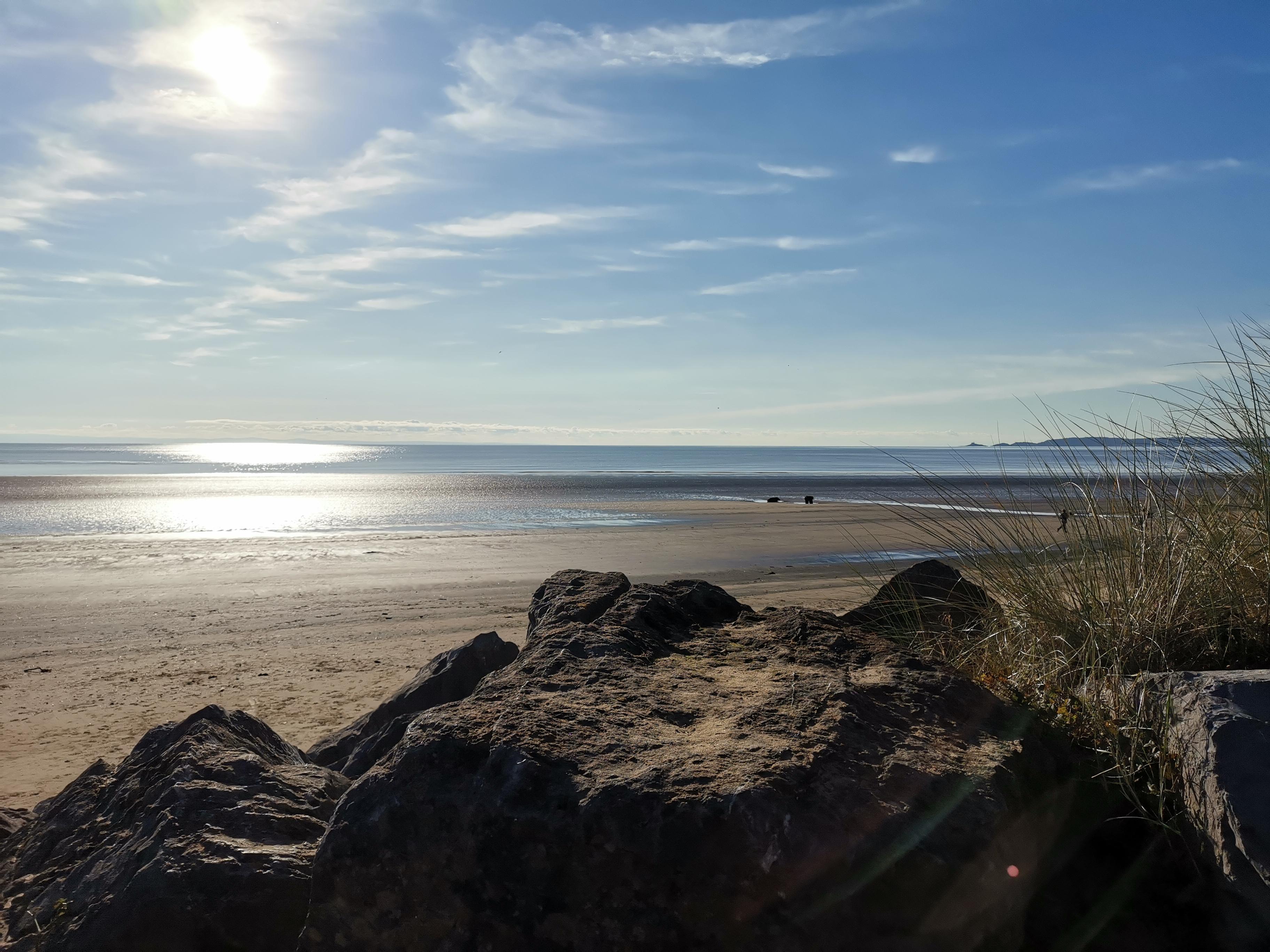
20th International Conference on Advances in Experimental Mechanics, Swansea Arena, Swansea, UK
8 – 10 September 2026
The 20th in a series of conferences organised by the British Society for Strain Measurement showcasing novel and innovative research in Experimental Mechanics. The conference was chaired by Professor Hari Arora, Professor in Biomedical Engineering, Swansea University.
Programme
Final programme as pdf here
Click on the links to view abstract as pdf
† Indicates permission not provided for abstract open access
Tuesday 8th September 2026 |
|||
| 8:30 | Registration and Refreshments - Level 2 | ||
| FSG VIP Lounge | |||
| 9:30 | Welcome – Professor Hari Arora, Conference Chair, Swansea University | ||
| FSG VIP Lounge | The Peter Lynn and Partners Suite | ||
| Session 1.1a DIC Methods, Simulation & Uncertainty Quantification Chair: Mike Sutton |
Session 1.1b Residual Stress Chair: Mathew Roy |
||
| 10:00 | A Scalable Open-Source 2D Digital Image Correlation (DIC) Engine Capable of Handling Gigapixel Images Joel Hirst UK Atomic Energy Authority |
Solid State Phase Transformation and Restraint in Residual Modelling of 100+ Pass Low-Alloy Steel Welds Robin C Laurence University of Manchester |
|
| 10:20 | Generating DIC speckle patterns via ray tracing for uncertainty quantification on curved surfaces Wiera Bielajewa UK Atomic Energy Authority |
SimSetup: An Integrated Digital Workflow for Planning and Analysing Residual Stress Measurements on Engin-X Ruiyao Zhang ISIS Neutron and Muon Source |
|
| 10:40 | Long Term Stability of Stereo-DIC Calibration Rory Spencer UK Atomic Energy Authority |
|
|
| 11:00 | pyvale.zraster: A Performant Software Rasteriser for Digital Image Correlation Uncertainty Quantification Lloyd Fletcher UK Atomic Energy Authority |
Influence of Residual Stress on Fatigue Crack Growth of Ferritic Steel |
|
| 11:20 | Correlated Solutions – Technical Presentation 'Latest Developments in Digital Image Correlation for FEA Comparison' | ||
| 11:30 | Session 1.EM Plenary Session Chair: Professor Hari Arora, Swansea University EMex: Meet the Exhibitors |
||
| 12:00 | Lunch and Exhibition - Level 0 | ||
| FSG VIP Lounge | The Peter Lynn and Partners Suite | ||
| Session 1.2a Materials Testing 2.0 & Virtual Fields Method Chair: Fabrice Pierron |
Session 1.2b Metals, Microstructure & HRDIC Chair: David Asquith |
||
| 13:20 | Extracting Anisotropic Plasticity from a Single Heterogeneous Test Using Full-Field Measurements Andraž Maček University of Ljubljana |
Using in-situ HRDIC bend testing to examine local-stress state driven plasticity in pure copper |
|
| 13:40 | Mapping the spatially varying yield strength of welded joints Robert Hamill UK Atomic Energy Authority |
Effect of Electron Beam Welding on Microstructure and Mechanical Behaviour of Near-β Titanium Alloy Meng Tong University of Manchester † |
|
| 14:00 | Identification of Elasto-Plastic Property of Aluminium Alloy Under Multiple Mechanical Tests Makoto Uchida Osaka Metropolitan University |
||
| 14:20 | Plenary Session 1.P Professor Caitríona Lally, Trinity College Dublin, Ireland Chair: Hari Arora Exploring The Synergistic Effect Of Calcification And Structural Damage on Bioprosthetic Heart Valve Leaflets Using Bespoke In-vitro Testing |
||
| 15:10 | Break and Exhibition - Level 0 | ||
| FSG VIP Lounge | The Peter Lynn and Partners Suite | ||
| Session 1.3a Biomechanics & Soft Matter 1 Chair: Shakir Jiffri and Yanis Polydoros |
Session 1.3b Aerospace Applications & Large Structures DIC Chair: Richard Curry |
||
| 16:10 | Realtime permeability estimation during tissue growth within different scaffold designs Feihu Zhao Swansea University † |
Digital image correlation (DIC) & testing of aerospace components for Hydrogen Powered Gas Turbines Aikaterini Katsouli Swansea University † |
|
| 16:30 | Characterizing External Pressure in Compression Garments Using a Modular Test Rig: Design and Validation Angelo Karunaratne Swansea University |
Integrating Multi-System DIC into Hybrid Testing for Large-Scale Testing of Aerospace Structures Ramani Sankar Rajendran Airbus UK † |
|
| 16:50 | Digital Image Correlation for Biomaterial Characterisation: Challenges and Applications in Soft Tissue Waleed Albustami Swansea University |
Measurement of Full-Field 3D Displacement of Large Structures using a Multi-camera stereo-DIC System Jangam Babu IIT Madras |
|
| 17:10 | Ex vivo experimental investigations and modelling of visco-hyperelastic behaviour of the human facial tissues Eyad Awad Swansea University |
Biaxial Response of Composite Propellant at Low Temperature: Effect of Displacement Rate and Biaxiality Ratio Aakash Kumar IIT Madras |
|
| 17:30 | Close of Day 1 | ||
| 18:00 | Drinks and Buffet Networking Reception - The Observatory, Oystermouth Road, Swansea | ||
Wednesday 9th September 2026 |
|||
| 8:30 | Registration and Refreshments - Level 2 | ||
| FSG VIP Lounge | The Peter Lynn and Partners Suite | ||
| Session 2.1a DIC Model Validation & Digital Twins Chair: Ksenija Dvurecenska |
Session 2.1b Fatigue & Fracture 1 Chair: Catrin Davies |
||
| 9:00 | Impact of depth of field reduction on stereo DIC-based model validation Vahid Firouzbakht MatchID NV |
Prediction of Creep Crack Growth in 316H Stainless Steel Clarynnsia Lai Imperial College London † |
|
| 9:20 | Validation of Electromagnetic Load Simulations for Fusion by Digital Image Correlation (DIC) Adel Tayeb UK Atomic Energy Authority |
Through-Thickness Fracture Analysis of a Ductile Steel by Observing 3D Surface Displacements David Asquith Sheffield Hallam University |
|
| 9:40 | On the high-fidelity digital twinning of image-based mechanical tests in an HPC environment Pascal Bouda Université Paris-Saclay, CEA |
Heat error reduction in real-time DIC measurements for high temperature biaxial crack growth trials Andreas Blug Fraunhofer IPM |
|
| 10:00 | A Radiometric Digital Twin of the Measurement Space for Digital Image Correlation Experiments Owen Tyley University of Bristol |
Applying fracture toughness test methods to specimens additively manufactured by filament-deposition methods Peter Bailey Instron |
|
| 10:20 | Round table discussion on Experimental Verification of Computational Models | Patch Repair of Impact-Damaged CFRP: Effects of Patch Material and Laminate Thickness Adit Jasra University of the West of England |
|
| 10:40 | Break and Exhibition - Level 0 | ||
| FSG VIP Lounge | The Peter Lynn and Partners Suite | ||
| Session 2.2a Biomechanics & Soft Matter 2 / Medical Chair: Catriona Lally |
Session 2.2b Infrared, Thermal & TSA Chair: Will Christian |
||
| 11:20 | Application of Surface Strain Measurements to Assess Structural Morphology in Medical Applications Izabela Nowakowska Heriot-Watt University † |
Thermoelastic Stress Analysis under signal undersampling conditions Giuseppe Pitarresi University of Palermo |
|
| 11:40 | Exploring Mechanical Treatments to Reduce Calcification in Bioprosthetic Heart Valves Ryan Ginley Trinity College Dublin |
Validation of a New Modelling Framework for TSA of CFRP Components Janice Barton University of Bristol |
|
| 12:00 | Image-based fracture mechanics of cortical bone during in situ Sr-micro-CT three-point bending Marcin Sikorski Heriot-Watt University |
Full-Field Uncertainty Quantification of Thermographic Phosphor Digital Image Correlation Caroline Winters National Physical Laboratory † |
|
| 12:20 | 3DASE A Novel 3D Strain Measurement Technique Applied to Needle Insertion in Gel Brain Phantom Thomas Pritchard Swansea University |
TSA of Carbon/Epoxy Composite Laminates Under Cyclic Loading Using Harmonic Amplitude Characterisation Shun Tomizawa University of Bristol |
|
| 12:40 | Round table discussion on Experimental Challenges in Biomechanics | 3D Decomposition of uncalibrated thermoelastic emission data for automated damage monitoring Joseph Eyres University of Liverpool |
|
| 13:00 | Lunch and Exhibition - Level 0 | ||
| FSG VIP Lounge | |||
| Session 2.YSA BSSM Young Stress Analyst Competition - Finalists Chair: Neha Chandarana |
|||
| 14:00 | Decoding Additively Manufactured Functionally Graded Metals Using the Virtual Fields Method Maximalian Kephart Colorado School of Mines |
||
| 14:25 | High Level Strain Sensors: The first step, a functional electrode Alexandra Perryman Swansea University |
||
| 14:50 | Homogeneity & Biofidelity of Fabric-Reinforced Elastomers as Arterial Mechanical Reference Materials Matijs Loeckx KU Leuven |
||
| 15:15 | Mechanical performance of a 3D-printed Distributed Fiber Optic Sensor (DFOS) Maria Paula Flores Espino Université Gustave Eiffel |
||
| 15:40 | Break and Exhibition - Level 0 | ||
| FSG VIP Lounge | |||
| 16:00 | Session 2.P Measurements Lecture Chair: Daniel Mulvihill Professor Michael Sutton, University of South Carolina, USA Recent Developments in Characterization of Advanced Material Response |
||
| 17:00 | Close of Day 2 - If delegates are not going to their hotels during this break, then we recommend a walk on the beach or "The Swigg" at the National Waterfront Museum | ||
| 18:30 | Pre- Dinner Drinks Reception - Swansea Arena, Main Hall | ||
| 19:00 | Conference Dinner - Swansea Arena, Main Hall | ||
Thursday 10th September 2026 |
|||
| 8:30 | Registration and Refreshments - Level 2 | ||
| FSG VIP Lounge | The Peter Lynn and Partners Suite | Gower Gold Lounge | |
| Session 3.1a impact, Blast & High Strain Rate Chair: Angelo Karunaratne |
Session 3.1b Fatigue & Fracture 2 / Nuclear Materials Chair: Rory Spenser |
Session 3.1c Novel Experimental Methods & Sensing Chair: David Kumar |
|
| 9:00 | Mesoscale Mechanical Testing: Possibilities for High Strain Rate Characterisation Arijit Lodh Cranfield University |
Experimental Method for Testing Fracture Toughness of RVP Steel at High Speed and Small Sized Samples Ben Sargeant Imperial College London † |
2D mapping of volume change in sheet elastomer testing using back-to-back stereo DIC systems Fabrice Pierron MatchID NV |
| 9:20 |
Inferring spatial pulses from DIC of near field blast loaded plates |
UKAEA Material Research Facility – Mechanical Testing Capability Henk Nolles UK Atomic Energy Authority |
Coupled In-Situ Contact Mechanics and Electrical Performance in Triboelectric Nanogenerators Charchit Kumar IIT Madras |
| 9:40 | DIC of plate behaviour under buried blast loading, residual displacement and correlation with spall pattern Ross Waddoups University of Sheffield |
Investigating the Effects of Yttrium Additions on the Tensile and Creep Properties of Modified RAFM Steel Talal Said Abdullah Swansea University |
Transense SAW Sensors for Torque and Temperature Measurement in next-generation smart electric drive systems Tomasz Rybak Transense Technologies PLC |
| 10:00 | Experimental SHPB Characterisation of AISI 1045 Steel for Machining Applications Arman Mozaffary University of Sheffield |
Early-Stage Failure Predictions in Fusion Materials using Machine Learning Joshua C Lee University of Sheffield |
Evaluation of Residual Stresses in Rotary Friction Welds Between Dissimilar Steels Using an Interlayer Shixian Yue University of Manchester |
| 10:20 | Measuring Dynamic Tensile Properties of Saturated Concrete in Spalling Tests using DIC-VFM Approach Mushfiqullah Sapay Université Grenoble |
||
| 10:40 | Break and Exhibition - Level 0 | ||
|
FSG VIP Lounge |
|||
| Session 3.P1 Plenary Session and Strain Best Paper Chair: Janice Barton |
|||
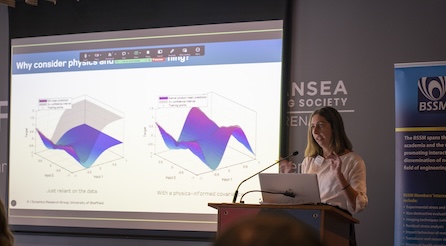
| 11:30 | Plenary Speaker: Professor Lizzy Cross, University of Sheffield, UK Modelling structures with physics and data |
||
| 12:15 | Fylde Best Paper in 'Strain' for 2025: Towards a Digital Virtual Twin for Heterogeneous Thermomechanical Experiments Alessandro Lambrughi KU Leuven, Belgium |
||
| 13:00 | Lunch and Exhibition - Level 0 | ||
| FSG VIP Lounge | The Peter Lynn and Partners Suite | ||
| 13:50 |
Session 3.2a |
Session 3.2b Additive Manufacturing Chair: Feihu Zhao |
|
| 14:00 |
A New Testing Method for Implementing Diaphragm Pre-Tensioning in Double Diaphragm Forming |
Accelerated Creep Testing of Laser Powder Bed Fusion Ti6Al4V Amy Milne Imperial College London |
|
| 14:20 |
Characterisation of filament wound carbon fibre composites through open-ended pressure testing |
|
|
| 14:20 | High Aspect-Ratio Flat Optical Fibres for In-Situ Multi-Axial Strain Sensing in CFRP Laminates Robin Hartley University of Bristol |
Additive manufacturing of inherently damped titanium structures Kacper Uzdowski University of Edinburgh † |
|
| 15:20 | Plenary Session Closing Session – Conference Chair: Hari Arora |
||
| 15:40 | Conference Close Tea and Coffee will be available before departure on Level 0 |
||
† Permission not provided for abstract open access
I was amazed by the high quality of presentations...the place to be this year
International Research
The 20th annual conference was organised by the British Society for Strain Measurement and brought together leading international researchers from academia and industry to exchange ideas and showcase research and innovation in experimental mechanics.
The conference was chaired and organised by Professor Hari Arora, Swansea University, UK
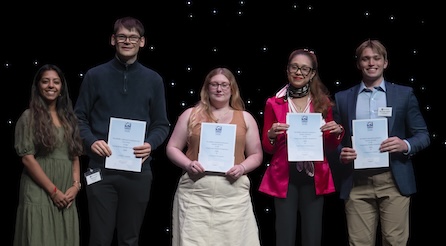
Young Stress Analyst Competition
![]() Conference Themes
Conference Themes
The conference covers all areas of experimental solid mechanics and aims to draw together researchers and industrialists from a diverse range of sectors, including but not limited to Aerospace, Automotive, Rail, Biomedical, Construction, Power & Energy. Abstracts are welcome on any topic that falls within this broad scope.
The conference will have thematic sessions on specialist and emerging areas in experimental mechanics including:
- Adhesive
- Aerospace Applications
- Automotive Applications
- Biomaterials & Biomechanics
- Data Driven Testing
- Fatigue & Fracture
- Impact, Blast and High Strain Rate
- Infrared & Thermal Methods
- Maritime Applications
- Medical Applications
- Characterisation of Metals, Microstructures and Welded Joints
- Model Validation
- Nano & Micromechanical Testing
- Novel Experimental Techniques
- Nuclear Applications: Fission & Fusion
- Optical and DIC Techniques
- Residual Stresses
- Soft matter
- Non Destructive Evaluation and Structural Health Monitoring
- Testing of Additively Manufactured Materials
- Testing of Polymers, Composite and Adhesives Materials
- Tomography & Radiography
- Tribology and Contact
- Virtual Fields Method
I was impressed, you don't see this quality of presentations in most conferences' Dr Mohammad Fotouhi, (Delft University of Technology, Netherlands)

Conference Highlights

Conference Reception
World renowned speakers
Conference fuel
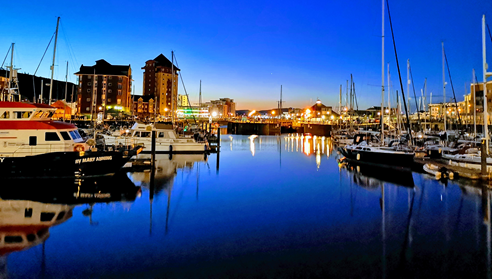
Swansea Marina